
Africa's Big Bet:
Unleashing Entrepreneurs for Jobs and Livelihoods
Our Impact Since 2013

133,850
Entrepreneurs, youth & professionals reached

140,001
Direct and indirect
jobs created

1,953,959
Livelihoods
supported

18%
Average revenue growth
over the last 3 years
133,850
Entrepreneurs, youth & professionals across 39 countries
Reach

140,001
Direct and indirect
jobs created
Jobs
Created
1,953,959
Jobs created and
improved
Livelihoods Supported
18%
Average over the
last 3 years
Revenue
Growth
In 2025, AMI significantly scaled its impact, reaching 27,951 businesses—an 8x increase over 2024. Key highlights from the year include:
-
Reach & Demographics: AMI achieved this growth through a mix of direct training and partnerships with local BDS providers and youth "Growth Guides." Participants were 51% women and 80% youth.
-
Business Performance: Despite global economic turbulence, supported MSMEs showed positive results. The average annual revenue growth was 53% (median 6.3%), with women-led businesses outperforming these averages.
-
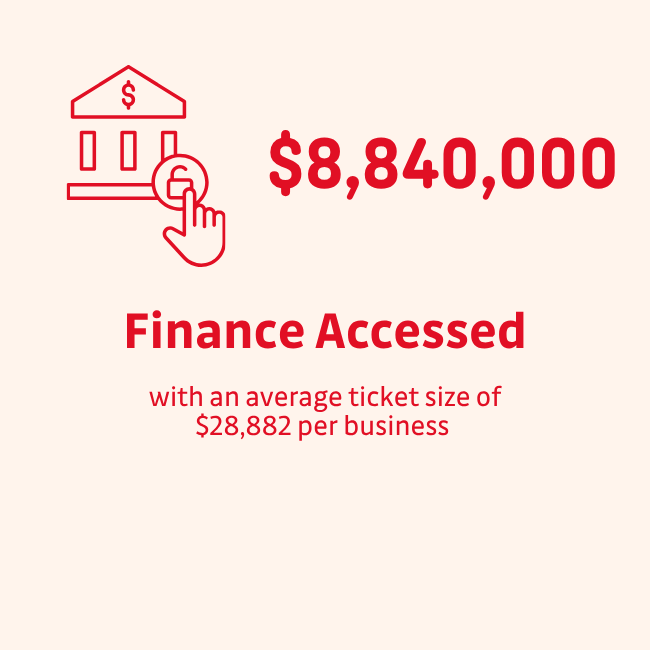
ROI & Finance: The training generated a 46x return on investment in incremental SME revenue and a ~6.9x return on livelihoods. Additionally, 38% of supported businesses accessed a total of $8.84 million in finance.
Impact in 2025



2025 was a year of massive growth. We turbocharged our reach by 8x to support 27,404 businesses across Africa - from micro-businesses in rural Rwanda to high-growth innovation leaders in Lagos. We achieved this step-up in scale by supplementing our flagship learning programmes with last-mile tech+touch services and support for smaller Business Development Service (BDS) providers.
The businesses we supported generated a 36x return on investment in just one year. Businesses increased their revenue by an average of 50% (6.8% median), with women-led businesses outperforming the average at 56% (median 10%).
Job growth was positive in 2025 despite a year of global economic turbulence, although slightly more muted than in 2024, delivering a robust 7.7x livelihoods return on investment, with 6,762 new direct and indirect jobs created across 3,046 businesses. Businesses accessed finance at a similar level to previous years, with 38% of supported businesses securing a combined $8.84 million in financing.
While this report captures our broader economic and ecosystem impact, AMI also works directly with growing companies to build high-performing teams. To see how we partner with organizations on workplace learning and talent development, visit the AMI Enterprise page.

The Power of Access: How one entrepreneur is helping thousands of African students turn opportunity into impact.
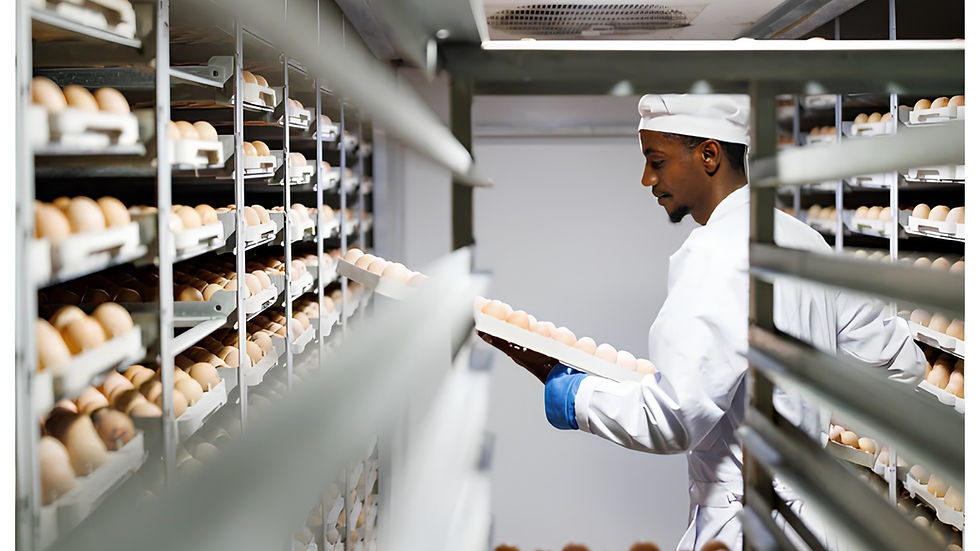
Empowering African Leaders for Sustainable Impact: The Hatch Africa Story

Mukandayishimiye Christine, Growth Guide (Kataza Program)

From Ambition to Impact: Building a Healthcare Ecosystem in Ethiopia

Featured Stories

Opportunities to Deepen Impact
Our thirteen years of evidence demonstrate that well-designed SME support in Africa is significantly improving business performance, employee wages, and job creation.
Preliminary findings from our upcoming randomized controlled trial (RCT) in Kenya, which evaluates our approach of combining digital learning, facilitator-led sessions, and peer learning to support SMEs, are consistent with our broader evidence base, including positive effects on wage growth. This impact is achieved at an investment of approximately $1,000 per business.
Our findings contribute to a growing global body of research showing that improving management practices is a powerful driver of SME growth, resilience, and job growth. (e.g. a recent 10-year follow-up study led by World Bank economist David McKenzie in Colombia found that group-based SME consulting continued to generate compounding revenue growth and job creation over time).
There is now a powerful, compounding evidence base showing that targeted SME management support is one of the most cost-effective levers for driving business growth and job creation across Africa.
Once again, our impact data has identified the job creation power of the top-performing businesses on our programme. This year, the top 20% of job-creating businesses on our flagship programme grew their headcounts by 60.3%, creating about 7FTE jobs each.
On average, they grew their revenue by 66% YoY (median 25%), and excitingly, showed sustained growth, with a CAGR of 47% (median 33%). Support to them achieved an incredible average of $193 on the training dollar in incremental revenue. These champions achieved outsized finance access results, too - 52% accessed finance with an average ticket size of $36,621.
Backed by this evidence and the support of the Livelihood Impact Fund, we are now offering more intensive access to finance and coaching support to businesses with demonstrated power to create an outsized number of jobs.Read the story of Engineer Workineh Gudissa, who created 250 new jobs in 2025 alone
While robust evidence has established high-quality SME support as one of the most effective tools for driving business growth and job creation, its greatest value comes when it shapes how governments and development institutions invest in and deliver support at scale. Macro-conditions across Africa are increasingly creating opportunities for national-scale SME support. Governments are investing in digital infrastructure and entrepreneurship platforms that can enable more coordinated delivery, data collection, and access to support at scale.
AMI has seen firsthand through partnerships such as our work with Development Bank of Rwanda and Kenya’s Financial Inclusion Fund that embedding SME support within government and institutional ecosystems can accelerate adoption, strengthen local ownership, and create pathways for sustainable scale.
At the same time, major funders are increasingly shifting from fragmented, short-term interventions toward approaches that strengthen economic ecosystems and drive broader-based growth.
This creates a significant opportunity to move from supporting individual businesses to building scalable systems that enable more SMEs to grow, create jobs, and contribute to economic development.
AMI's approach to scaling business development services is based on the principle that the ‘payer’ for SME growth support is different based on the business’ growth stage/segment. These may be donors, SMEs themselves, private sector players who benefit from SME growth, and ultimately governments.
For micro and rural enterprises, we deliver fully donor-funded programmes that reach businesses with the greatest need and the least ability to pay. As businesses grow, programmes such as our Grow Your Business and Aspire Business Growth programme combine development funding with SME co-investment, helping entrepreneurs build the capability and willingness to invest in their own growth.
As these businesses mature, we see many transition to purchasing AMI's commercial workplace learning and leadership solutions. See what happened when Hatch Africa invested in its managers.
For both growing and established businesses, there is increasing potential for the private sector to fund and enable SME growth support. Financial institutions, for example, are investing in SME development to deepen client relationships, build stronger pipelines, and de-risk lending portfolios—as demonstrated through partnerships such as our work with African Guarantee Fund and the Co-operative Bank of Kenya. The data-based link between AMI’s business development services and finance access for MSMEs builds this case - 38% of our businesses supported in the last 3 years accessed finance in 2025, even where the support offered to them was not focused on finance linkage.
The private sector is also playing a larger role. Corporations are increasingly investing in the small businesses that make up supply and distribution chains in their expanding African markets. We deepened our partnerships with corporates and foundations, such as Walmart Foundation, who increasingly view SME strengthening not as corporate social responsibility alone, but as a strategic investment in more resilient value chains, markets, and communities.
AMI's experience shows that a range of players across private, public, and development sectors are deeply invested in building Africa's SME ecosystem. Scaling SME support requires segmented business models that combine development funding, corporate partnerships, government investment and increasing SME payments as businesses grow.
AMI’s approach is built for women - from sourcing campaigns that focus on women role models to flexible programme designs, case studies of women businesses, and analysis of sex-disaggregated data to ensure our work is serving women well.
For young rural women supported through our Kataza programme in Rwanda, we go further to ensure their learning needs are met in context. This programme equips AMI-trained young women growth guides to support young women entrepreneurs in their language with evidence-backed, offline tools. The focus is on access to favourable finance. Using Open Data Kit, we feed data back to our team to inform future design decisions to reach and grow women micro-entrepreneurs.
By the end of 2025, this programme reached 24,309 nano and micro-entrepreneurs, 63% of them women and 99% youth, through 177 Growth Guides across Rwanda. The impact for these young women is exciting: 67.7% MSMEs showed YoY revenue growth, 40.4% accessed finance (almost all loans), and 76.7% MSMEs reported that the programme introduced useful practices, tools, or ways of working into their business.
Since 2022, AMI has been working to equip small local business development service providers in Africa with our diagnostic tools, multiplying our impact as they roll out these services in the field - and reaching businesses who depend on a level of proximate, face-to-face support.
To date, AMI has worked to equip 294 local BDS providers with our tools, in partnership with AGRA, the Argidius Foundation, Vitol Foundation, and the Private Sector Foundation of Uganda. These BDS providers are SMEs themselves, and our support improves their services to SMEs as well as their own sustainability. 87.8% reported that AMI’s diagnostic tools, recommendations, methods and learning content added value to their ability to deliver high-quality support to MSMEs. 96.9% reported improvements in the quality of services they deliver to MSMEs since joining the program, and 96.1% reported improvement in client satisfaction.
We have collected baseline data on the performance of the MSMEs these BDS providers support, and in 2027 look forward to sharing MSME-level revenue and jobs impact from this indirect approach.
Read about how Jane formalised her business to support hundreds of SMEs.
The idea of continuous learning is baked into AMI's business support approach. However, recently we've noticed the businesses we support are embedding a culture of learning within their own teams. In bigger numbers than ever, businesses are returning again and again to AMI - first for themselves, then for their employees. And they pay for it themselves.
In response, we've expanded our range of paid short programmes, covering everything from AI to managing performance to successful selling and targeted at all professionals - not only business owners.
Check out the list here, in case your team could benefit!
In 2026, AMI launched the development of an AI-powered SME Growth Coach, with the support of the Agency Fund accelerator. The millions of data points collected by AMI over the last decade create a huge opportunity for outsized impact, as we leverage that data for hyper-personalised and powerful business support at rock-bottom cost. The potential for massively cost-effective impact is exciting.
We’re currently deploying our 13 years of data on learner behaviour and our thousands of tools and hundreds of hours of video learning for African entrepreneurs to unleash the power of hyper-tailored business support for African entrepreneurs and managers.
Watch this space as we roll this out at a greater scale in late 2026.
The AMI Intervention
AMI Sits at the Intersection of Three Disciplines
How do people actually learn and embed new skills? Kolb's experiential cycle, Jennings' 70:20:10, and Ebbinghaus' forgetting curve underpin everything we design.
What drives firm growth in African markets? Research by McKenzie, Bloom & Van Reenen, and Woodruff shows management practices drive productivity and survival.
What drives human behaviour and change? We focus specifically on mindset — the internal beliefs, motivations, and dispositions that determine whether people act, persist, and grow.
What it is and why it works
AMI's approach is grounded in research from learning science, development economics and behavioural science. Every learning journey combines human support from learner success managers, facilitators and coaches with AMI's AI-enabled learning platform and peer learning, tailored to each learner's needs.


When I started Renray, I thought I was in the poultry equipment business. AMI challenged me to think more deeply about my customers' needs, helping us strengthen our systems and rethink our value proposition. By expanding from poultry cages to complete poultry solutions, we've grown our business by 70% and increased our contract farming business from 6,000 to around 60,000 birds a year.

Claire Njuguna
Renray Poultry
Grow Your Business Programme
Kenya


Under the Hood of Our Impact Data
Behind every number in this report lies a consistent and transparent approach to measuring impact. Here is a quick look at how we do it.
-
Sample. Insights come from our annual business survey, which is sent to every eligible business we support. We follow up actively to secure strong, representative coverage across countries, sectors and business sizes. In 2025, 843 businesses responded, a 21% response rate from our high-touch programmes (2023–2025), our focus for impact measurement. We compare results to self-reported baselines, and survey responses collected during and after our programmes, to track change over time.
-
Jobs and livelihoods. We calculate full-time equivalent (FTE) job creation and improvement across our portfolio, then apply employment and household multipliers to estimate the total livelihoods supported. In 2025 we estimate that both new and improved jobs contributed to household-level impact.
-
Direct vs indirect jobs. Direct jobs are those within the supported business itself. Indirect jobs are generated beyond it, through supply chains and the re-spending of wages. Because indirect jobs cannot be counted directly, we estimate them with an employment multiplier of 7.5, meaning each direct job is associated with a further 7.5 indirect and induced jobs (based on published research on African businesses).
-
Livelihoods ROI. We estimate the income generated through new jobs and improved salaries, then divide this by total programme cost. In 2025, for every $1 in training spend, $7.7 was returned to employees of African MSMEs (compared to $9.85 in 2024).
-
Revenue ROI. We track changes in revenue for each business over a three-year period (2023–2025), comparing reported figures to baselines, and divide the revenue gain by the cost of delivery. In 2025, every $1 spent generated $36 in increased business revenue, on average.
-
A note on averages. Our impact metrics are right-skewed: a few very large businesses can pull an average well above the typical case (for revenue growth, for example, the average is 50% while the median is 6.8%). Where we report an average we say so, and we show the median alongside it so the typical business is visible.
-
Business size. We classify enterprises by annual revenue:
-
Micro: less than $10,000
-
Small: $10,000 – $100,000
-
Medium: more than $100,000
-
This helps us benchmark growth and tailor support across our portfolio.
-
A note on our RCT. Provisional findings from our upcoming randomised controlled trial (RCT) in Kenya are consistent with the direction of our own impact data, including positive effects on wage growth. The RCT is conducted on a different sample and will be shared separately once fully available.
For a deeper dive into our methodology, see the full technical appendix on this link.
Events
.png)
AMI Impact Roundtables
The AMI Impact Roundtables are a three-part series exploring the key themes from our 2025 Impact Report through conversations with entrepreneurs, programme leaders and partners.
Designed for funders, governments, corporates and ecosystem builders, each session shares practical lessons drawn from 13 years of supporting entrepreneurs at scale.
Register your interest to receive updates as each roundtable is announced, along with speaker information, event dates and registration details.

Connect with our partnership advisors
AMI partners with leading impact organizations to design and deliver scalable learning solutions that drive job creation, business growth, leadership development, and workforce transformation.
Please share your information and our team will reach out to find a time to discuss how we can support your learning and development goals.